
Guest Review: Vesper
Posted: January 19, 2011 Filed under: Book of Sand, Romgi the Enigma 1 Commentby Jeff Sampson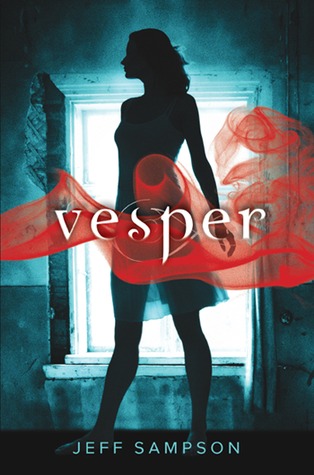
{ 2011 | HarperCollins | 304 pgs }
I’ve come not to expect much when Roni gets a book for review in the mail. That being said, I was in a desperate state when this book arrived; I needed some light reading. I spend a large portion of my day pouring over legal textbooks and cases that span two centuries. Every now and then I need a book that doesn’t require any thinking. Roni had me read the letter from the publisher that accompanied the book and I knew that this book would fill my need. On that level, it did not disappoint.
I have several issues with the book. I know they say you can’t judge a book by its cover (and in fact that seems to be a theme of this book), but let’s throw literary caution to the proverbial wind and do precisely that. The title is Vesper. What does vesper mean? Looking it up in the thesaurus reveals “dusk, eventide, twilight.” Wait, twilight? Wasn’t there some mildly popular series by that name?
So let’s get this clear right out of the gates. This is a book that is trying to capitalize on the success and popularity of the modern tween gothic genre that started with Stephanie Meyer’s Twilight series; expect the supernatural. Is it as entertaining as Meyer’s saga? No. Was it entirely original? No. I will tolerate an unoriginal story when the storytelling itself is new, inventive or otherwise captivating. Was the storytelling here new, inventive or otherwise captivating? No. However, I am certain that there are people out there who will enjoy this book.
The story follows Emily as she tries to understand that changes that are happening to her. Emily is a self-described “entertainment geek” (read: she likes books and movies). The same night a classmate, also named Emily, is murdered, the protagonist begins to notice changes in herself: she is painfully aware of her body, she has mood swings and periods of forgetfulness, she sneaks out of the house in trashy clothes in an attempt to seduce random guys (metaphor for puberty? Yes). Are these changes somehow related to the death of her classmate? Read the book to find that out. I will tell you that I lacked any sort of empathy for Emily’s plight. The author seems to glamorize violence, underage drinking, and promiscuity as long as you feel empowered while you do it. I don’t know a lot about being a teenage girl, but I am pretty sure that there are other ways for a girl to feel empowered than to dress trashy and make out with a lot of guys. I don’t insist a book to have a moral to the story, but I’d prefer it to not make bad morals seem like heroism.
Furthermore, the author fails at addressing the target audience. Best I can tell, this book is aimed at girls who are in the range of 12-16 years old. I’m pretty sure people born past ’95 aren’t going to get references to Joss Whedon’s Buffy the Vampire Slayer, Shinichiro Watanabe’s anime series Cowboy Bebop, Warner Bros’ Looney Toons or old-school cassette tape players. Also, I’m not sure that people still use “wicked” as slang for “good.” It seemed more like Sampson spent an afternoon remembering slang from his own high school days rather than making any attempt at learning what teenagers say NOW. If your book feels dated before it is even published, it has issues.
tl;dr: If you can get it for free from the library, it might be worth a few hours of your time. Otherwise skip this Twilight-inspired teen-fest.
This was a guest post by Romgi. Check out his other stuff here.
Disclaimer: Roni received a copy of this book for review directly from the publisher. The opinions contained here are my own and I was not compensated in any other way for them.
House of Many Ways
Posted: January 12, 2011 Filed under: Book of Sand 1 Commentby Diana Wynne Jones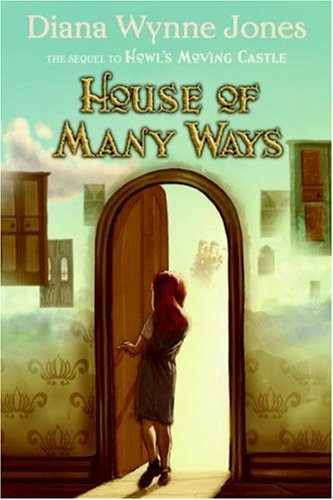
{ 2008 | Greenwillow Books | 416 pgs }
Last year when I was trying to finish up my reading challenge, I got a couple books on the Kindle and wasn’t sure which ones I’d end up using. I decided to count The Familiars for E and J since it was co-authored, which meant I still had House of Many Ways left over. My classes have started out very, very slowly, so I was able to read House of Many Ways this past week.
The book is advertised as being a sequel to Howl’s Moving Castle; I think a more accurate description would be that it takes place in the same universe, and takes some of the major characters (although they are minor characters in House of Many Ways). The story had an odd pace to it. For a long time, it seemed to not be going anywhere, but towards the end it picked up desperately. That being said, it was great for filling my “spare time” (ha).
Our main character is Charmain, a young woman who’s led a sheltered, respectable life. She goes to house-sit for her distant relative(-in-law), a famous wizard. His house has many ways.
You know I’m not likely to give any further summary of a book I liked. House of Many Ways is definitely recommended, even if you haven’t read (or seen) Howl’s Moving Castle.
Picture books
Posted: January 10, 2011 Filed under: Book of Sand Leave a commentKersplatypus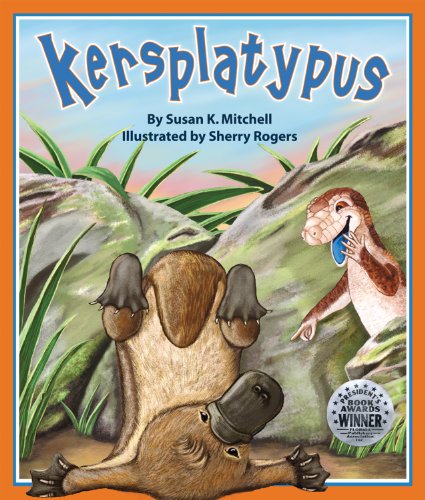
by Susan K. Mitchell / illustrated by Sherry Rogers
A baby platypus doesn’t know what he is or where he belongs. Other Australian animals try to help him. I found the illustrations mediocre and the plot annoying. One animal, the blue-tongued skink, constantly berates and mocks the platypus, then later gets his comeuppance by falling on a rock himself. This isn’t really the sort of message I want the Bwun to get from a book (or movie, or real life). I don’t necessarily look for books that will teach big lessons, but I do object to bad lessons snuck into the books I do get. Skip it.
A Day with Wilbur Robinson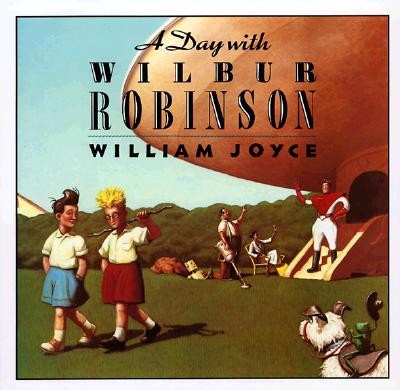
{written and illustrated} by William Joyce
This was the basis for the film Meet the Robinsons, and I love Joyce’s book George Shrinks, so A Day with Wilbur Robinson seemed like a sure hit. The illustrations were fun, but, as with the film, there wasn’t much of a plot. It was simply a compilation of the kooky things that happen at the Robinson household. I think the story could be improved. Skip this and read George Shrinks instead.
Jungle Song
by Miriam Moss and Adrienne Kennaway
A baby tapir goes exploring in the lush rainforest, listening to the jungle song describing the many animals he encounters. The watercolor illustrations are off-the-charts amazing. Unfortunately, they’re accompanied by amateur rhymes and sloppy cadence. I do actually recommend looking through this book, but don’t feel bad about skipping the text entirely.
 Jarom
Jarom Mika
Mika hilleries